
What it costs
How much does commercial cleaning cost in Fort Worth?
There is no useful per-square-foot answer, because a dental practice, a distribution warehouse and a 200-seat restaurant of identical size need completely different work.
Hygiene Maids of Fort Worth7 min readUpdated
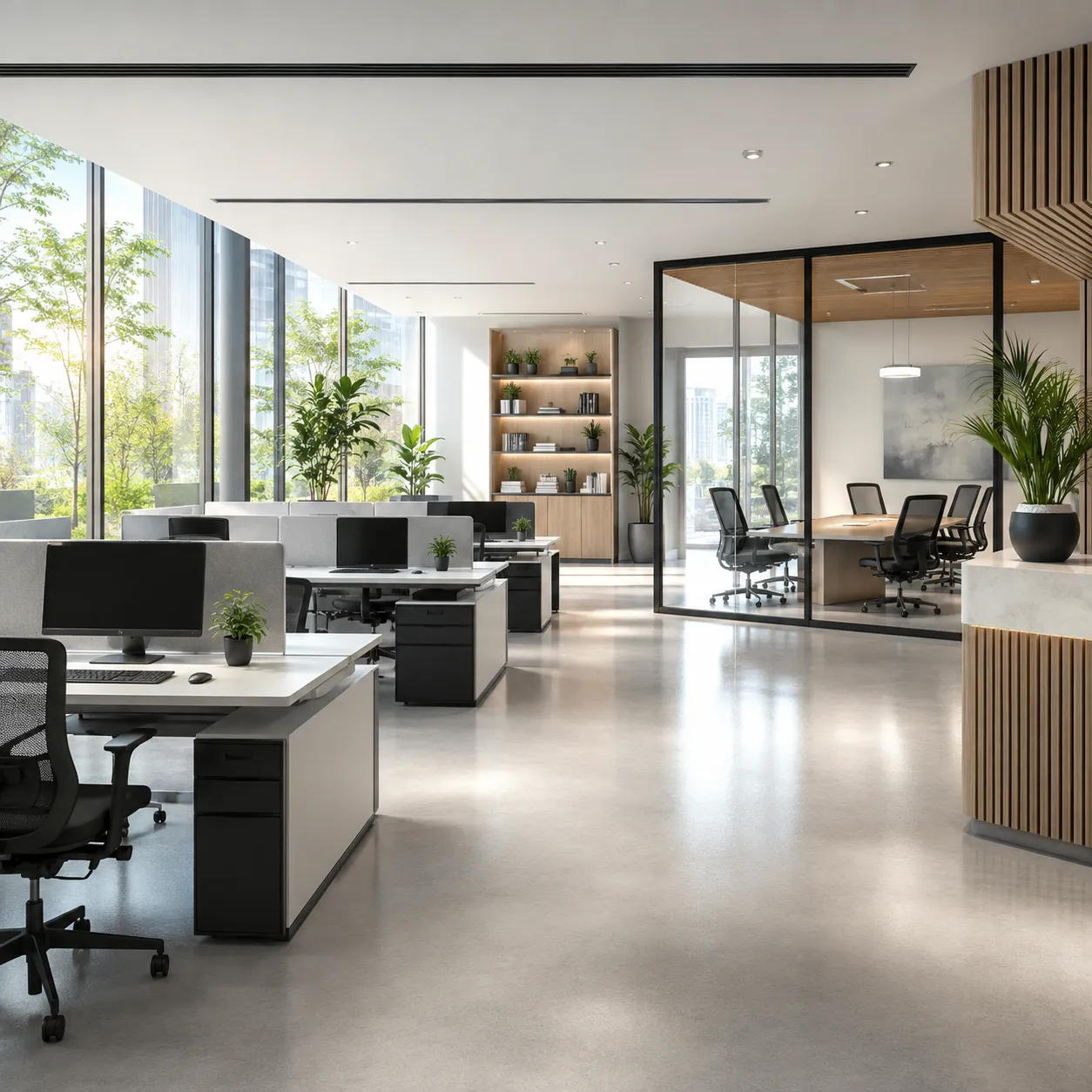
The quote is a scope document with a number attached
Residential cleaning has a recognizable shape, so a price is meaningful on its own. Commercial cleaning does not, so the price only means something alongside the scope it belongs to.
This is why almost every dispute about commercial cleaning is a dispute about scope rather than about quality. "We clean three times a week" tells you nothing about whether baseboards are included, how often high dusting happens, or who refills the paper.
A quote worth comparing assigns a frequency to each task, not to the contract as a whole.
What drives a commercial number
Roughly in order of impact across facility types.
Restroom count and traffic
The strongest driver in most buildings. Restrooms are slow, they are used by everyone, and they cannot be skipped.
Frequency
Daily service costs more in total and less per visit. High-frequency schedules may qualify for discounts of up to 35%.
Facility type
A retail floor needs entry glass and traffic-path attention a warehouse does not. A restaurant needs nightly dining-room detail. These are not interchangeable scopes.
Floor type and area
Sealed concrete, carpet tile, LVT, quarry tile and polished stone all need different equipment and passes.
Operating hours
Overnight and outside-hours work is more constrained than daytime work, and requires access and alarm arrangements.
Scope depth
Whether detail work is included in the standing agreement or added later at a different rate.
How different facility types shift the mix
Offices — restrooms and break rooms every visit; workstations and floors two to five times a week; detail work weekly or monthly. See office cleaning.
Retail — entry glass and floors weighted heavily; traffic paths need more than the rest of the floor; fitting rooms and checkout every visit. See retail cleaning.
Restaurants — nightly front-of-house reset dominates; booth seams, table bases and floors under furniture take the time. See restaurant cleaning.
Medical offices — waiting rooms, touch points and restrooms weighted; non-clinical space only, quoted with an explicit boundary. See medical office cleaning.
Warehouses — the people-space footprint matters far more than the building size; offices, break rooms, restrooms and accessible walkways. See warehouse cleaning.
Exclusions are where quotes diverge most
Two commercial quotes at similar prices frequently describe different work because of what sits outside scope. Ask every provider to name their exclusions.
- Kitchen exhaust hood and grease duct cleaning — a licensed specialty, not general cleaning
- Regulated clinical disinfection, terminal cleaning and medical waste handling
- Hazardous-material remediation, asbestos, lead and mold abatement
- Industrial floor scrubbing with ride-on equipment, racking and elevated work
- Carpet extraction, floor stripping and refinishing
- Exterior windows, pressure washing and forecourt work
Save up to 35% on qualifying multi-day recurring schedules
Businesses that need cleaning several days a week, or daily, may qualify for recurring discounts of up to 35%. That is a ceiling, not a standard rate — not every commercial account receives 35%.
What determines the figure: facility type, square footage, cleaning frequency, scope of work, required tasks, number of weekly visits, operating schedule and any custom requirements. It is set in the quote after a walk-through.
Questions
Common questions
- Can you give a per-square-foot rate?
- Not meaningfully. Two 5,000 sq ft facilities can need completely different work depending on restroom count, floor type, headcount, hours and premises type. A per-square-foot figure looks precise and predicts almost nothing.
- Why is a walk-through necessary?
- Because the variables that drive labor — floor type, restroom count, entry condition, traffic pattern, ceiling height, how the space is used — are not visible from a floor plan or a phone call.
- Do you require a long-term contract?
- Scope and schedule are written down so both sides can point at the same document. What we will not do is hold a business to an arrangement that has stopped matching the building.
- How long does it take to start?
- After a walk-through and an agreed scope, most accounts start within a couple of weeks. Access arrangements — keys, codes, badges, building registration — are usually the longest lead item.
Request a commercial quote
Tell us the facility type, square footage, restroom count and how many days a week you need us.