
After building work
How to remove construction dust after remodeling
If you have cleaned your house after a remodel and the dust came back a week later, you did not clean it wrong. You cleaned the rooms and not the system that was still circulating it.
Hygiene Maids of Fort Worth6 min readUpdated
Why it keeps coming back
Plastic sheeting and zip walls help, but they do not seal. Every time a door opens, air moves and fine dust moves with it. The HVAC system then does the rest: a return in or near the work area pulls dust into the ductwork and distributes it to every room in the house within a day or two.
That is why homeowners keep finding dust weeks after a remodel is declared finished. They clean the kitchen, and a week later the bedroom bookshelves look gray. The dust was never in the kitchen — it was in the system.
The other reason is that fine dust is genuinely light. Dry dusting lifts it into the air rather than removing it, and it lands somewhere else. Most "the dust came back" is really "the dust moved."
The order that works
- 1Wait until the trades are genuinely finished. If the punch list is open — a door to adjust, trim to caulk, a panel to swap — each of those tasks puts more dust back. Cleaning before that is cleaning twice.
- 2Change the HVAC filter first, not last. A filter loaded with construction dust restricts airflow and pushes fine particles past it. Change it before you start, and plan to change it again a few weeks later.
- 3Vacuum before you wipe, everywhere. Use a vacuum with good filtration on hard surfaces, not just floors. Dry dusting a construction-dusted surface redistributes it. This single change makes more difference than any product.
- 4Work top down, room by room, with the door closed. Ceiling fans and light fixtures, then high shelves and frame tops, then furniture surfaces, then floors. Closing doors stops you re-contaminating rooms you have finished.
- 5Clean the return-air grilles and supply registers. This is the step almost everyone skips and it is the one that stops the recirculation.
- 6Do soft surfaces properly. Upholstery vacuumed including seams, rugs and carpet vacuumed to the edges, bedding and curtains in affected rooms laundered.
- 7Wet-clean hard floors in multiple passes. The first pass lifts the bulk; the second gets what the first suspended and dropped.
- 8Come back in two or three weeks. Whatever the system was still holding will have landed by then.
Mistakes that make it worse
- Dry dusting first. Lifts fine dust into the air; it lands somewhere else and you clean it again.
- Using a household vacuum with a poor filter. It exhausts fine particles straight back into the room.
- Running the AC on fan during heavy cleaning. It moves everything you disturb to the rest of the house.
- Cleaning the work area only. Guarantees the dust returns from the rooms you did not touch.
- Leaving the old filter in. The single most common reason dust persists for months.
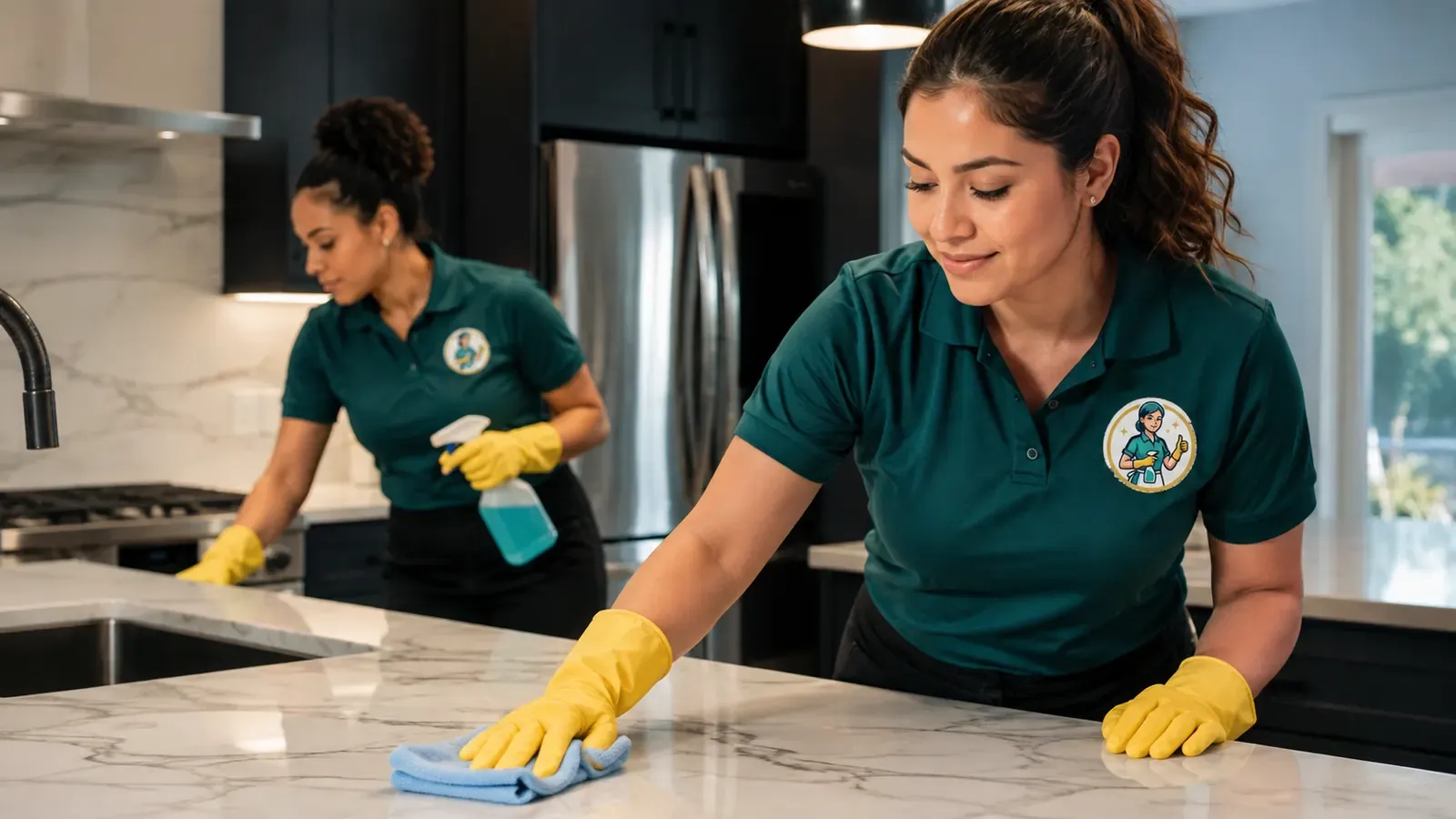
- Wiping new quartz or stainless with a dry cloth. Grit plus pressure equals fine scratches in a brand-new finish.
When to bring someone in
If the remodel ran more than a couple of weeks, involved drywall or tile cutting, or affected more than one room, the whole-house pass is a substantial job — and doing it badly means doing it twice.
Remodel and renovation cleanup is built for exactly this: an occupied home where dust has spread beyond the work area and the HVAC has been circulating it.
Questions
Common questions
- How long does construction dust keep appearing?
- Commonly two to four weeks after the work finishes, and longer if the HVAC filter was not changed. Fine particles held in ductwork get released gradually every time the system runs.
- Do I need my ducts professionally cleaned?
- Sometimes, after a significant remodel with heavy cutting. Duct cleaning is a separate trade with separate equipment. Cleaning the visible grilles and changing the filter resolves most cases; a professional can tell you if it goes further.
- Should I use a damp cloth or a dry one?
- Vacuum first, then damp. A dry cloth on construction dust redistributes it, and on a new hard surface it can scratch.
- Can I just book a deep clean?
- A deep clean uses products aimed at household soil in a single pass. For construction dust the technique and the sequence differ, and one pass will show a film again within days. See post-construction vs deep cleaning.
Get remodel cleanup quoted
Tell us which rooms were worked on, how long the project ran and whether the house was occupied throughout.